Blog
ESSAYS
March 22, 2010

Argentina has one of the most impressive cinematography in the world. Within that cinema, Fernando E. Solanas is a director of seminal importance. In his essay, Towards a Third cinema, Solanas and his co-writer, Octavio Getino, galvanize the overall revolutionary ideas of the time into the concept of a decolonization cinema, denouncing the weak, liberal arts that have, up until […]
March 22, 2010

In Les Carabiniers, Godard is in control, from playing with our scopophilic gaze in the makeshift rape scene or denying us narcissistic satisfaction.
October 1, 2010

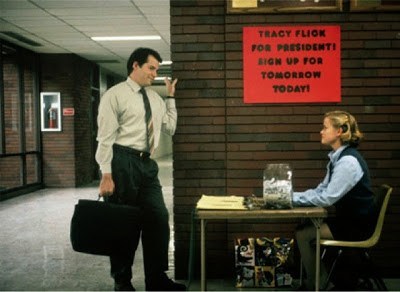
There are some movies that change your perception of what is possible, what is allowed. Alexander Payne's Election was that for me.
October 1, 2010

In Come Drink With Me, King Hu considers each of the director’s tools, using camera movement differently than editing or the wide-screen space.
March 22, 2010

Although separated by more than a decade, Funny Dirty Little War and Macunaïma both try to provoke social change by using satire.
February 27, 2018

I’ve been excited about Black Panther from the moment I heard about it. Anything that involves Our Lady Lupita (you know her as Lupita Nyong’o) get me psyched. I adore Lupita—and the fact that she can actually spit some bars is icing on a fine cake.
September 28, 2010

Wong Kar-Wai is considered influential. In the Mood for Love (2000) was a big commercial success for him. How does it compare to Wong Kar-Wai’s other work?
March 26, 2010

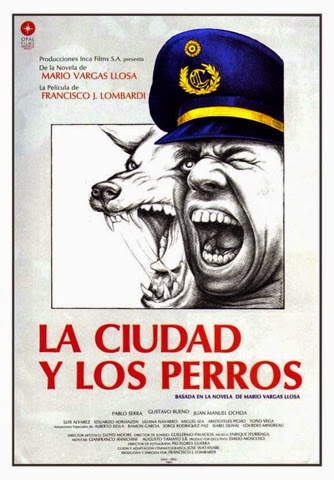
he City and the Dogs, based on the popular novel of the same name by Mario Vargas Llosa, is an allegory of power in South America.
March 20, 2018

I haven’t been motivated enough by any of the recent movies to add to the discussion. Black Panther has changed that. Although not a revolutionary film, elements of it speak to me profoundly.How does Black Panther paint the African-American portrait? How does it interact with other films from Africa and the African diaspora?
October 1, 2010

The transatlantic slave trade was one of the most disruptive acts in history, separating Africans from their backgrounds, traditions, and identities. This has had a significant impact on diaspora films.
September 30, 2010

Central Station is one of the most popular and internationally acclaimed Brazilian films of the 1990s. It heralded a renaissance in Brazilian cinema.
September 28, 2010











This essay will explore the duality of Cronenberg’s works, as a statement on man’s curiosity and an open window to the unknown in Videodrome and eXistenZ.
Leave a Comment